
Household pest cheat sheet
| Pest | What it looks like | Typical sign | Where to look |
|---|---|---|---|
| Bed bug | Reddish-brown, flat, apple-seed size | Rust spots, shed skins on mattress seams | Mattress, headboard, bed frame |
| Odorous house ant | Small, dark brown, coconut smell when crushed | Trails along counters and walls | Kitchens, bathrooms, wall voids |
| Brown recluse and black widow | Violin mark and six eyes; shiny black with red hourglass | Irregular webs in storage and woodpiles | Garages, boxes, undisturbed corners |
| Carpenter ant | Large, black or red and black | Coarse sawdust-like frass near wood | Damp wood, window frames, decks |
| Subterranean termite | Small, pale workers; winged swarmers in spring | Mud tubes, discarded wings | Foundation, crawl space, wood touching soil |
| German cockroach | Light brown, two dark stripes behind the head, about half an inch | Droppings like pepper, egg cases, musty odor | Behind appliances, under sinks, in cabinet hinges |
| Mosquito | Slender, long legs, whining flight | Bites at dawn, dusk or daytime | Standing water, shaded vegetation |
| American cockroach | Reddish-brown, up to two inches, yellow edge on the head | Single large roaches at night | Drains, garages, mulch, crawl spaces |
Pest control terms explained
- Bait: a slow-acting food-based product that insects carry back to the nest
- Tamper-resistant bait station: a locked box that holds bait out of reach of children and pets
- Exclusion: sealing gaps, installing sweeps and screening vents so pests cannot enter
- EPA-registered label: the legal instructions for where and how a product may be used
- Integrated pest management (IPM): inspect, identify, fix the cause, then use the least risky effective product
- Residual perimeter treatment: a product applied around the foundation and entries that keeps working for weeks
- Monitoring: glue boards, traps and inspection logs that show whether the plan is working
Myths and facts
- Myth: one treatment solves everything. Fact: many pests need a follow-up visit and fixes to entry points.
- Myth: a clean house cannot get pests. Fact: pests follow food, water and shelter, and even tidy homes can have them.
- Myth: spraying the ants you see ends the problem. Fact: baits that reach the nest work better and sprays can scatter a colony.
- Myth: natural means harmless. Fact: any pesticide, natural or not, should be used as the label directs.
- Myth: pests only appear in summer. Fact: rodents, roaches and spiders stay active indoors in winter.
Why moisture decides so many pest problems
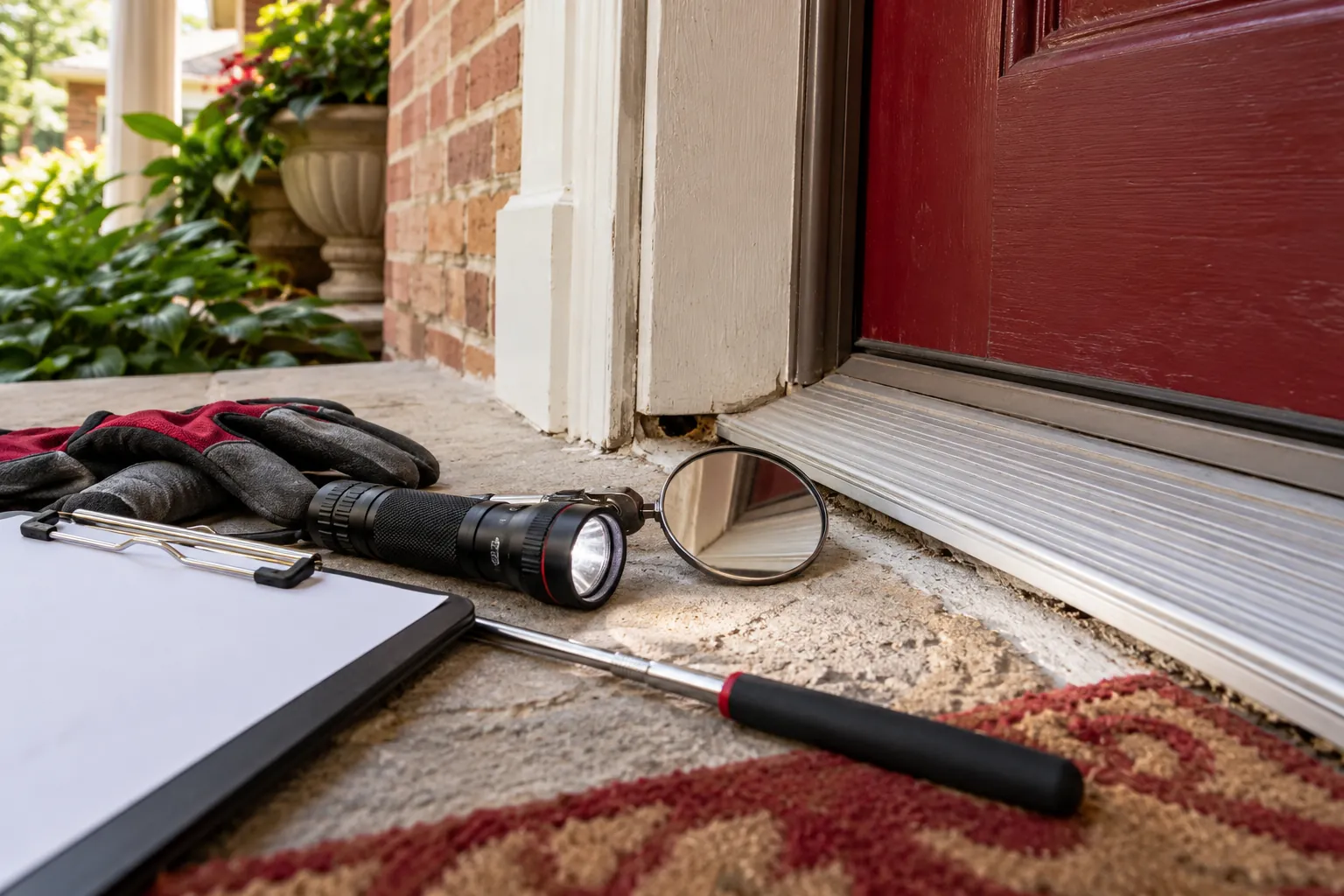
Take away the water and many pests lose the reason to stay. A slow leak beneath a sink, gutters that are clogged, a downspout dumping next to the foundation and an AC condensate line dripping on the soil can all sustain a population that no spray will clear, and the species that rely on it include silverfish, mosquitoes, earwigs, termites, cockroaches and carpenter ants.
Of all pest control steps, fixing moisture is among the simplest and the most lasting. Look under sinks, around water heaters, along the foundation and in crawl spaces, and have the provider point out every damp area found.
A checklist for this week
- Empty the trash often and clean bins
- Write down where and when you see pests, and take photos
- Fix any leaking taps, hoses or pipes
- Move mulch, wood and stored boxes away from the foundation
- Book an inspection if the problem is repeating
- Add door sweeps and repair damaged screens
- Trim plants off the walls and roof
How a pest control visit works, step by step
Pest visits that are done properly run in a fixed order, no matter which insect or animal is involved. Keep that order in mind when you talk to different companies, because a visit that leaves out the opening steps is the one to question.
- Inspection: the technician walks the outside first (foundation, vents, utility lines, eaves, fence lines, mulch) and then the inside (kitchen, bathrooms, garage, attic or crawl space).
- Identification: the species is named from the insect, droppings, damage or trail, because the right product and method depend on it.
- Plan: the provider explains what will be done, which products or devices will be used, and what you need to do before and after.
- Treatment or exclusion: the work is done in the places the inspection found, not by spraying every room.
- Follow-up: you get a date for the next check and a clear answer on what to report if activity returns.
Questions to ask before you agree to any pest control
- What species or problem did you find, and what did you see that proves it?
- Which products, baits or devices will you use, and where will they go?
- What will you write down for me: scope, exclusions, follow-up and product list?
- What will you seal, remove or fix, and what stays my job?
- Who is on site, and can you show the state licence or applicator ID for the work?
Mistakes that make pest control harder
When a treatment fails, the reason is usually one of a short list of common errors, and each of them is simple to avoid once it is pointed out.
- Spraying store-bought products around bait. Repellent sprays can make insects avoid bait they would otherwise eat.
- Treating only where you see the pest. Activity you see is usually a fraction of what is hidden in walls, voids and soil.
- Skipping the entry points. Without sealing, new pests replace the old ones.
- Mixing products. Overlapping chemicals can reduce results and add risk.
- Judging results in a week. Many programs take two to four weeks and a follow-up to settle.
What makes pest control different in Lincoln
Lincoln is the capital of Nebraska and home to the University of Nebraska, with older neighborhoods, rentals and many mature trees. Cold winters send mice and overwintering insects indoors from fall.
Warm, humid summers support mosquitoes, ants and wasps, and wet spells raise mosquito numbers. Student and rental housing turns over often, which raises the risk of bed bugs and cockroaches spreading. Put the same question to every provider you speak with: how do these local conditions alter the approach at your address? A technique that suits one climate or style of housing may do little in another.
Pest control across Lincoln and nearby cities
Pest Control Lincoln NE covers Lincoln, Nebraska and the surrounding area. Calls and requests also reach providers serving Waverly, Hickman, Bennet, Roca and Raymond. Coverage is confirmed address by address, so say your ZIP code when you call.
To get going, press Call Now at the top of any page and tell the person who answers what you found. That puts you through to an independent provider nearby, and the provider verifies your address, looks the property over and writes up the scope.